Every hospital unit has a Doris. She isn’t just a charge nurse; she is the structural integrity of the entire floor. She is the only person who knows where the good medical tape is hoarded, the veteran who can decipher a doctor’s completely illegible scrawl, and the one who keeps the terrified new grads from crying in the supply closet.
For two decades, Doris gave the administration her holidays, her weekends, her knees, and her unquestioning loyalty.
But when you spend twenty years running on concrete floors and absorbing the chaos of a chronically understaffed unit, the body eventually keeps the score. For Doris, the breaking point wasn’t a quiet retirement party with stale sheet cake. It was a Tuesday afternoon by Station 3 when her heart simply decided it had had enough and filed for immediate, mandatory PTO.
She had a massive heart attack right there on the clock.
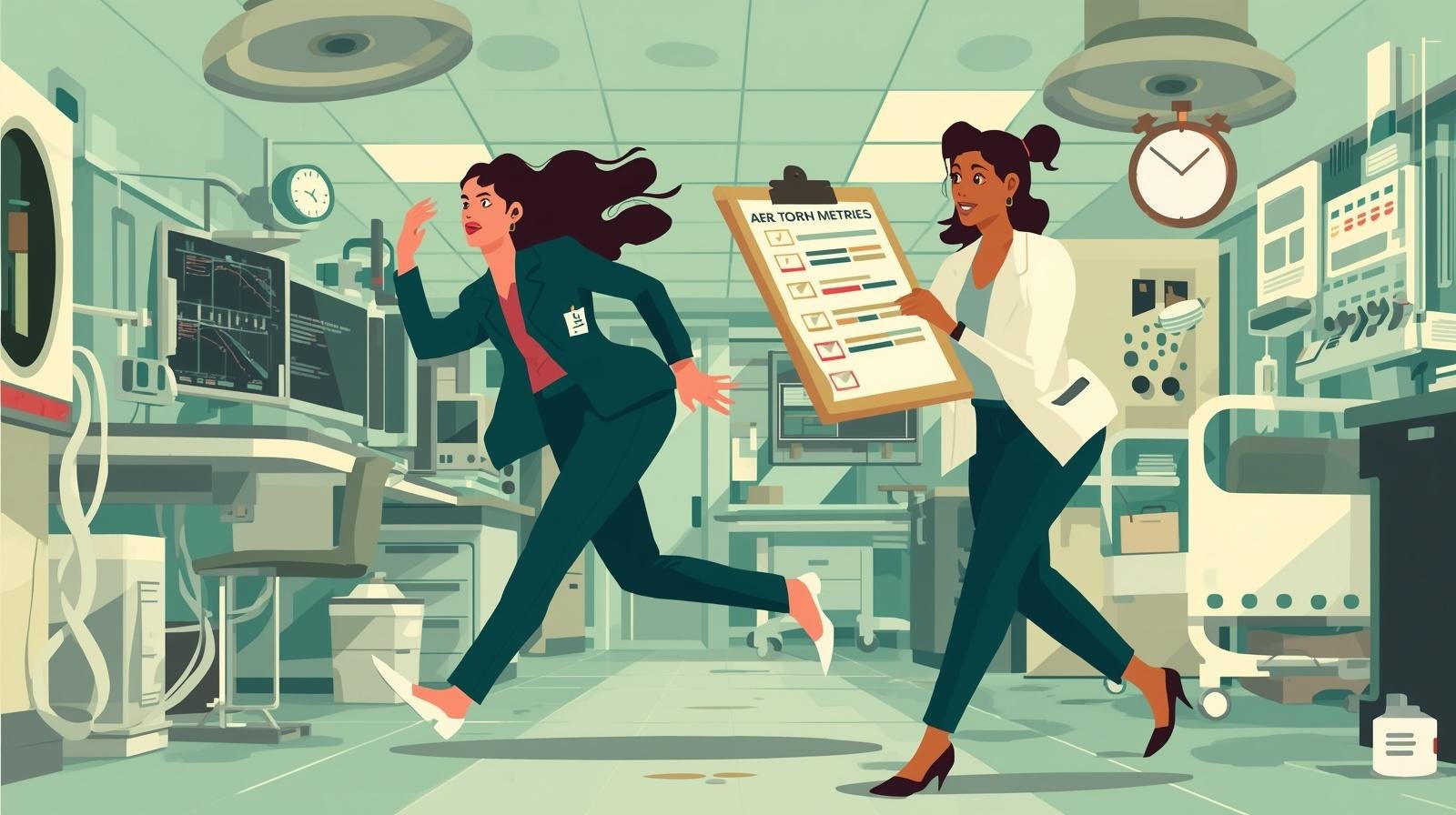
Now, in a normal industry, a dedicated employee collapsing on the job would trigger a wave of empathy, support, and perhaps a massive bouquet of flowers. But corporate healthcare is not a normal industry. It is a machine operated by people like Mrs. Tally-Wacker, the Director of Spreadsheet Optimization, and Chad, a mid-level Risk Management associate whose primary job is holding a clipboard and looking concerned about liability.
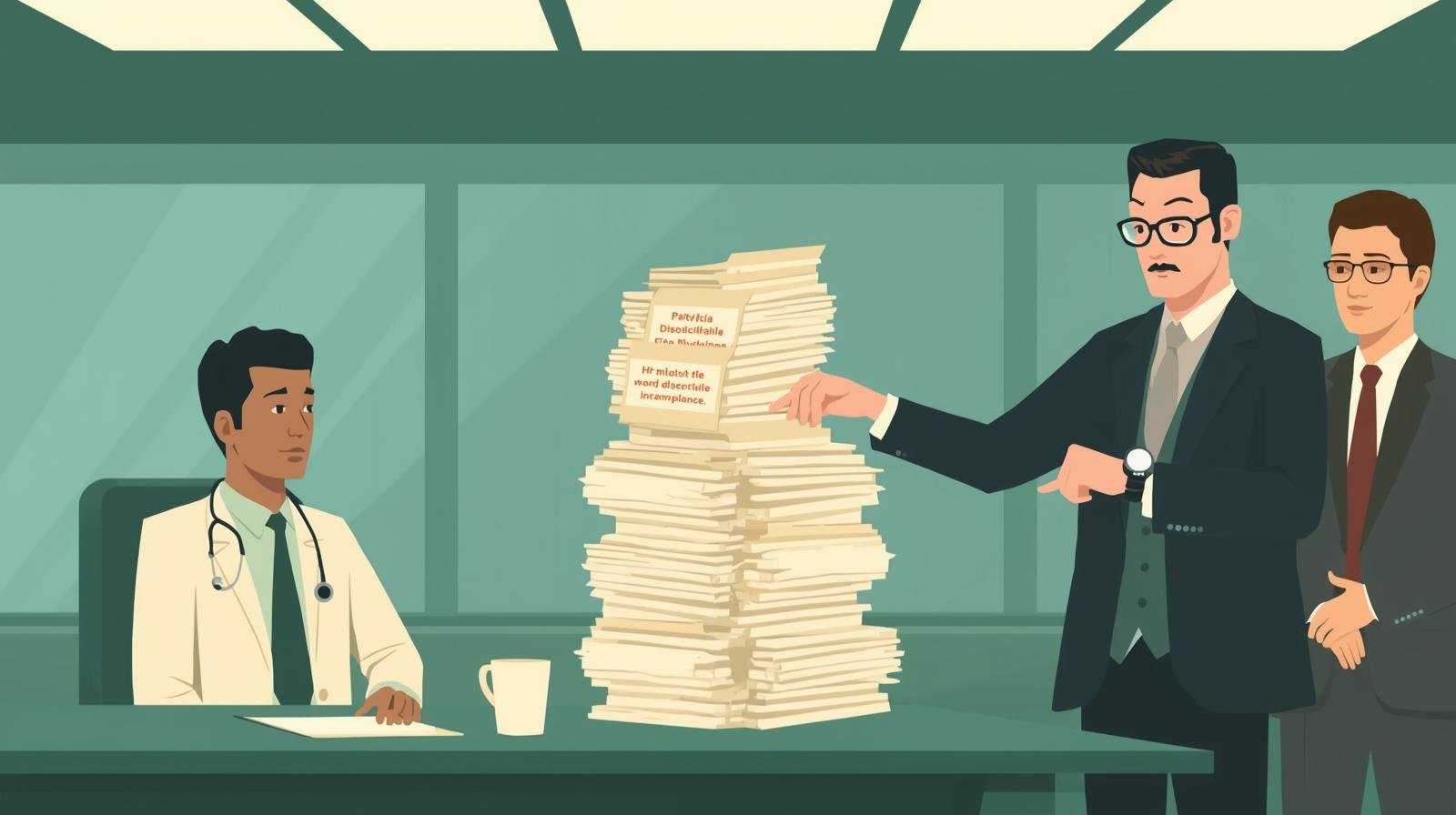
While Doris was in a recovery bed fighting her way back to health, Mrs. Tally-Wacker wasn’t drafting a “Welcome Back” card. She was looking at the unit’s budget and doing corporate math. A veteran clinician recovering from a cardiac event isn’t a human being to the administration; she is a red cell on an Excel document.
Six weeks later, Doris was cleared to work. She walked through the double doors of her unit, adjusted her scrubs, and made the familiar walk down the hall to Locker 42. It was a tiny, dented square of aluminum, but in a massive, sterile hospital, it was the one piece of real estate that belonged entirely to her.
She reached for her padlock, but her hand grasped empty air.
Standing there in the hallway was Chad, holding a pair of heavy-duty, industrial bolt-cutters.
They hadn’t called her. They hadn’t scheduled a transition meeting. Instead, while a woman who had given them twenty years of her life was recovering from a heart attack, the administration authorized HR to literally sever the lock on her personal cabinet. They boxed up her emergency stash of decent coffee, her spare stethoscope, and two decades of dignity into a recycled printer paper box. *** They redistributed her supplies to other members
Why? Because Mrs. Tally-Wacker had already reassigned Locker 42 to a 23-year-old travel nurse named Brayden who cost the hospital 15% less in benefits.
They didn’t have the courage to look a veteran healer in the eye and have a difficult conversation about her future. They let the bolt-cutters do the talking. They simply erased her footprint, quietly hoping she would take the hint, take her cardboard box, and disappear into early retirement without a fight.
To the corporate machine, loyalty is a one-way street, and everyone—even the absolute best of us—is ultimately just Disposable Doris.
Share This Story, Choose Your Platform!
The Anonymous Chronicles: Turning Trauma Into Tales
We can’t change what happened to Helyn, but we can change how your story is told.
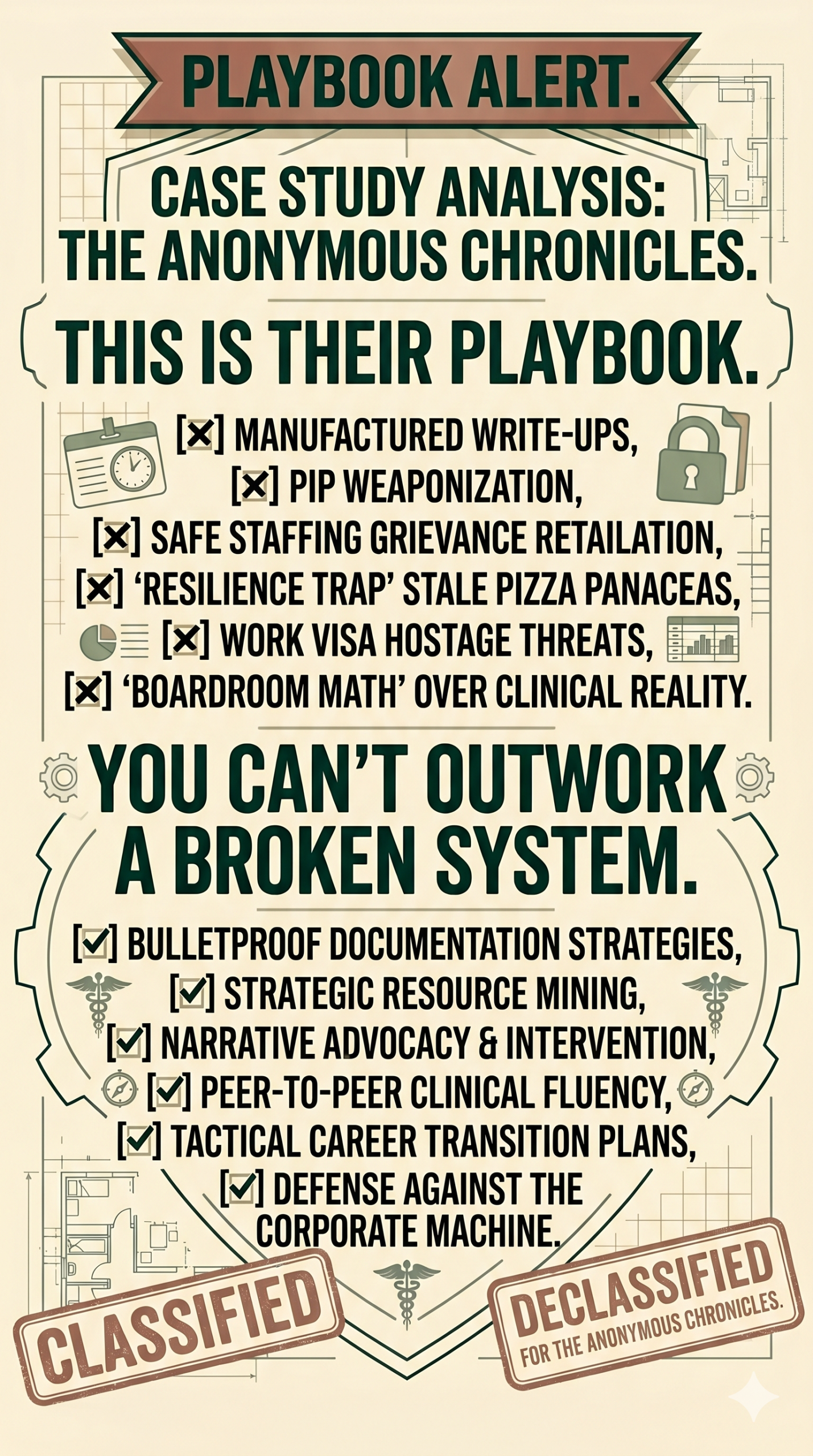
In healthcare, “The Machine” relies on you being too exhausted or terrified of retaliation to speak out. That is why we created The Anonymous Chronicles. We take your painful experiences, strip away your identifying details, and weaponize the satire. We protect the heroes, honor the patients, and put the HR administrators exactly where they belong: in the punchline.
Want to see how we translated my grandmother’s tragedy into a satirical takedown of corporate healthcare? Or are you ready to submit your own run-in with a “Chad” or a “Brenda”?